Fitness · Footwear Guide
Pickleball Shoes vs. Tennis Shoes: What’s Actually Different?
Affiliate disclosure: This article may contain affiliate links. CAH Health may earn a commission from qualifying purchases at no additional cost to you. Learn more.
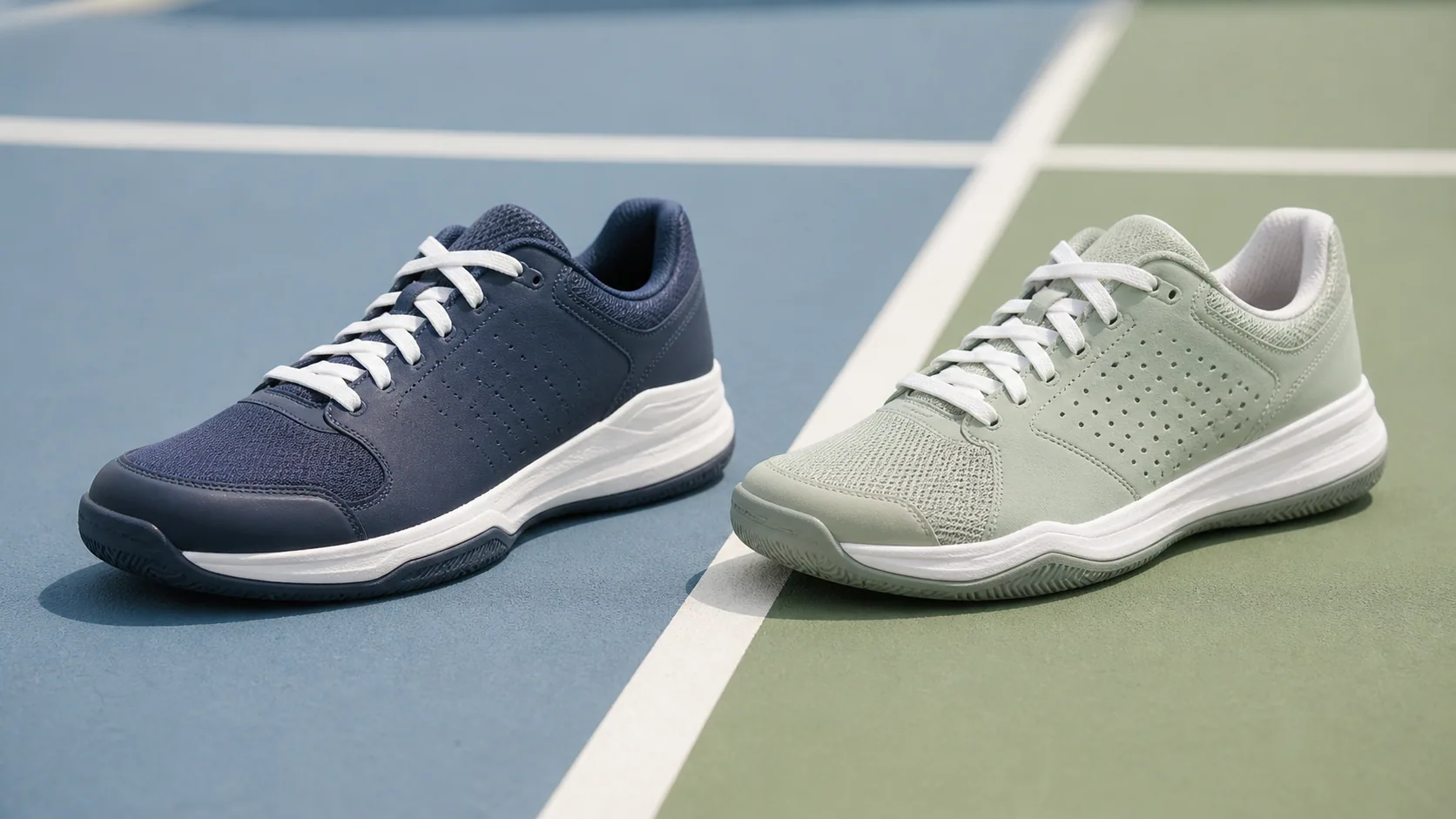
Short answer: tennis shoes are often a very good choice for pickleball. Both sports require a stable platform, lateral support, court traction, and an outsole that tolerates repeated stops and pivots. The differences between two individual models can be greater than the difference between the words “tennis” and “pickleball” on the box.
The useful question is not simply which label is better. Ask where you play, how your foot fits the shoe, how much cushioning you prefer, and whether you value lightweight speed or maximum durability.
How the two categories compare
| Consideration | Tennis shoe | Pickleball shoe |
|---|---|---|
| Movement support | Built for lateral cuts, sprints, and repeated stops | Built for the same general family of court movements |
| Outsole choices | Often organized by hard, clay, or all-court use | Often organized by indoor or outdoor pickleball use |
| Durability | Hard-court models may emphasize abrasion resistance | Varies from lightweight recreational to durable models |
| Cushioning | Ranges from court feel to substantial protection | Often tuned for comfort during shorter stop-start rallies |
| Best reason to choose | Proven fit, surface match, or a specific performance balance | Fit and features aimed at the needs of pickleball players |
What they have in common
Pickleball and tennis share a movement environment: a player accelerates over a short distance, stops, changes direction, and pushes laterally. That is why both categories tend to use a flatter, more stable platform than a typical road-running shoe. Both may also reinforce the toe and medial side of the upper where dragging and hard directional changes create wear.
This overlap is important for beginners. A properly fitting tennis hard-court shoe you already own may be a better pickleball option than a poorly fitting shoe marketed specifically for pickleball. If you are currently using a soft, high-stack running shoe, read our guide to running shoes vs. pickleball shoes for the bigger construction differences.
Where meaningful differences can appear
Outsole language
Tennis models are commonly described by tennis-court type, while pickleball models may use simpler indoor/outdoor language. Do not assume those labels map perfectly. An indoor pickleball court can be a smooth wood gym floor or the same acrylic surface used outside, and those floors ask different things of an outsole.
Weight and durability balance
Some tennis hard-court shoes prioritize durability because the sport can involve aggressive sliding and long baseline movement. Some pickleball shoes prioritize a lighter, more immediately comfortable feel. Those are tendencies, not rules. Compare the specifications and construction of the exact models in front of you.
Fit options
A category with more width choices or a last that matches your foot is valuable regardless of its label. The AAOS recommends choosing a toe box that follows the shape of your foot, securing the midfoot comfortably, and checking that the heel counter holds the heel in place.
Price and availability
Tennis footwear has a long product history and may offer more clearance models. Pickleball-specific lines can make it easier to understand the intended use. Neither category guarantees better value. A discounted court shoe that fits well can be a smarter purchase than paying more for a label.
Choose the shoe by this order
- Surface: identify whether you play on wood, acrylic, concrete, or another material.
- Fit: check length, width, toe space, heel hold, and midfoot pressure.
- Stability: test controlled lateral steps and stops.
- Durability: consider how often you play and how abrasive the surface is.
- Comfort: choose enough cushioning without feeling disconnected from the court.
Who should start with a tennis shoe?
A tennis hard-court shoe is a sensible starting point if it fits you well, feels stable, and matches your court. It can also be practical if you play both sports or find better width and clearance options in tennis lines.
Who may prefer a pickleball-specific shoe?
A pickleball model may be appealing if its fit, weight, cushioning, or indoor/outdoor guidance better matches your playing routine. Make the choice from those specific benefits—not from the label alone.
Can one pair work for both tennis and pickleball?
Yes, particularly when both sports are played on the same hard-court surface. Watch outsole wear and replace the shoe when grip becomes inconsistent, the midsole feels uneven, or the upper no longer holds your foot securely. If your pickleball venue uses a polished gym floor, confirm that your shoe is non-marking and appropriate for that surface.
For more detail, see our guide to indoor and outdoor pickleball shoes.
The bottom line
Tennis shoes and pickleball shoes are close relatives. Both can be suitable for pickleball when the model provides stable lateral support, reliable traction, and a secure fit. Surface and construction tell you more than the category label. Start with your foot and your court, then compare weight, cushioning, and durability.
Affiliate link
Sources and further reading
- Hospital for Special Surgery: Choosing stable court footwear
- AAOS OrthoInfo: Shoes—Finding the Right Fit
This article provides general educational information, not medical or individualized footwear advice.